Background
I was the teen in high school who was always sleep deprived in class, and I knew this was not how school should be. After reading all of the benefits that schools reaped when pushing their start times, I wondered why more schools didn't adopt the new timings. For my design capstone class, I decided to work on something I was passionate about: the strong connection between education and sleep. How might we encourage the understanding that healthy sleep habits enhance the mental and physical well-being of teenagers?
Challenge and Solution
People are not getting enough sleep, now more than ever. The sleep deprivation epidemic has a much more detrimental effect on health and well-being than many are aware of, and it disproportionately affects teens. The Snooze Campaign aims to resolve this problem by promoting good sleep hygiene and later school start times to give students more time to rest. While similar campaigns exist, they lack engaging visual design and struggle to resonate with teens. Through accessible and comprehensive design, The Snooze Campaign spreads the message effectively.
Why We Sleep
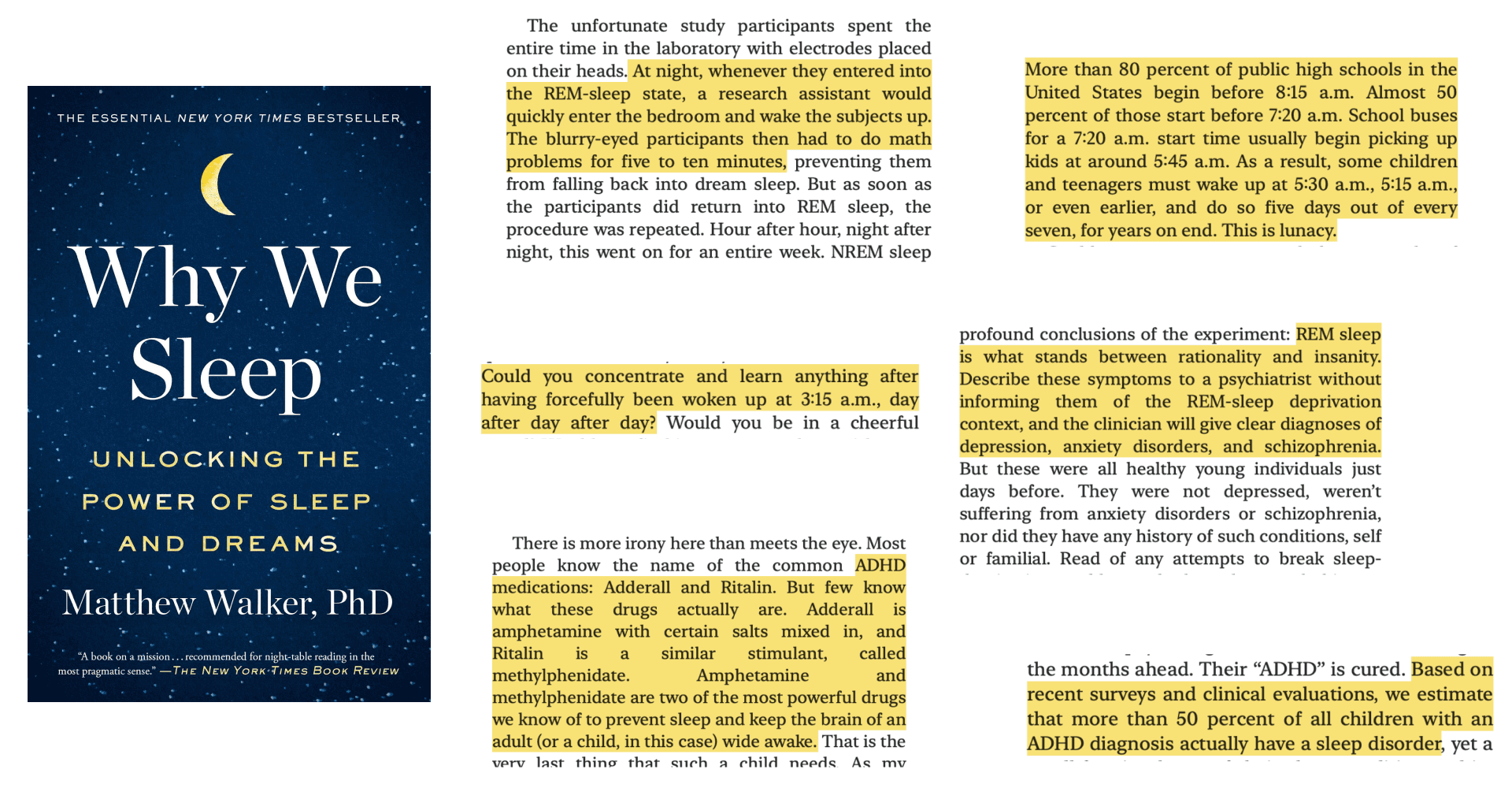
This was the book that partially inspired me to do this project, and it’s full of so much amazing research around sleep. It’s written by Matthew Walker, an English scientist and the director of the Center for Human Sleep Science at UC Berkeley, who specializes in neuroscience and psychology. As I read the book, I began highlighting points that stood out to me or that I knew I would be able to visualize with my designs.
Concept Exploration
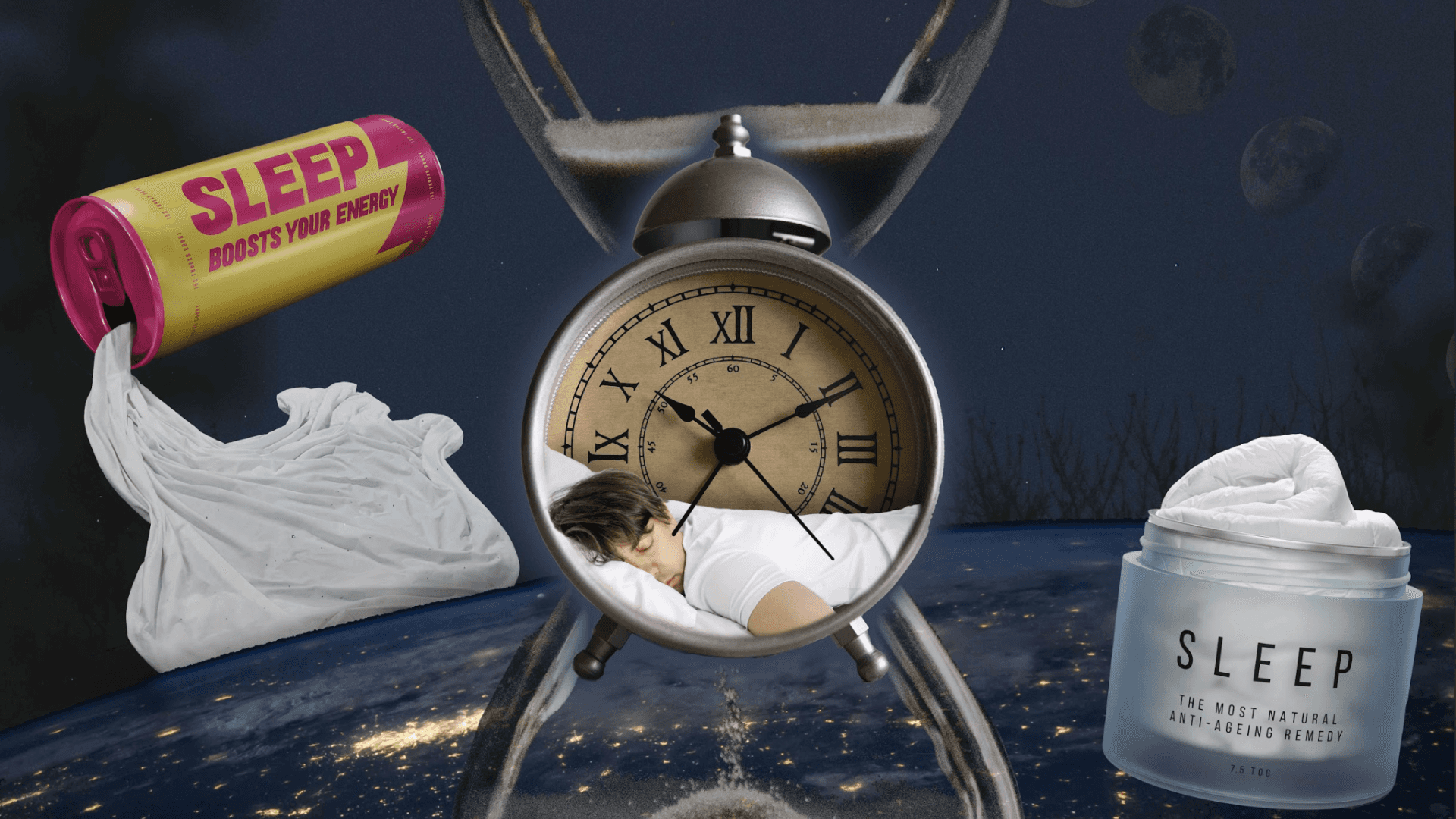
Creating a still life with objects representing sleep helped me think creatively about my project’s direction. This exercise opened up multiple research directions, from sleep cycles to environmental and lifestyle factors affecting rest. Each item symbolizes a key aspect of sleep and its impact:
Hourglass – Represents limited sleep time and the irreversible effects of deprivation.
Energy Drink & Blanket – Inspired by an IKEA ad, highlighting how sleep—not caffeine—is the real solution to tiredness.
Earth – The city lights at night symbolize light pollution; I’d like to explore how light exposure affects sleep.
Teen – Represents widespread sleep deprivation among adolescents and its impact on academic performance.
Alarm Clock – A nod to both external alarms and our body’s natural sleep-wake cycles disrupted by school and work schedules.
Moon Phases – Reflect different sleep cycle stages, like REM, and their role in feeling rested.
Face Cream & Comforter – Another IKEA ad insight, emphasizing how sleep is more effective than skincare in preventing aging.
Word Cloud
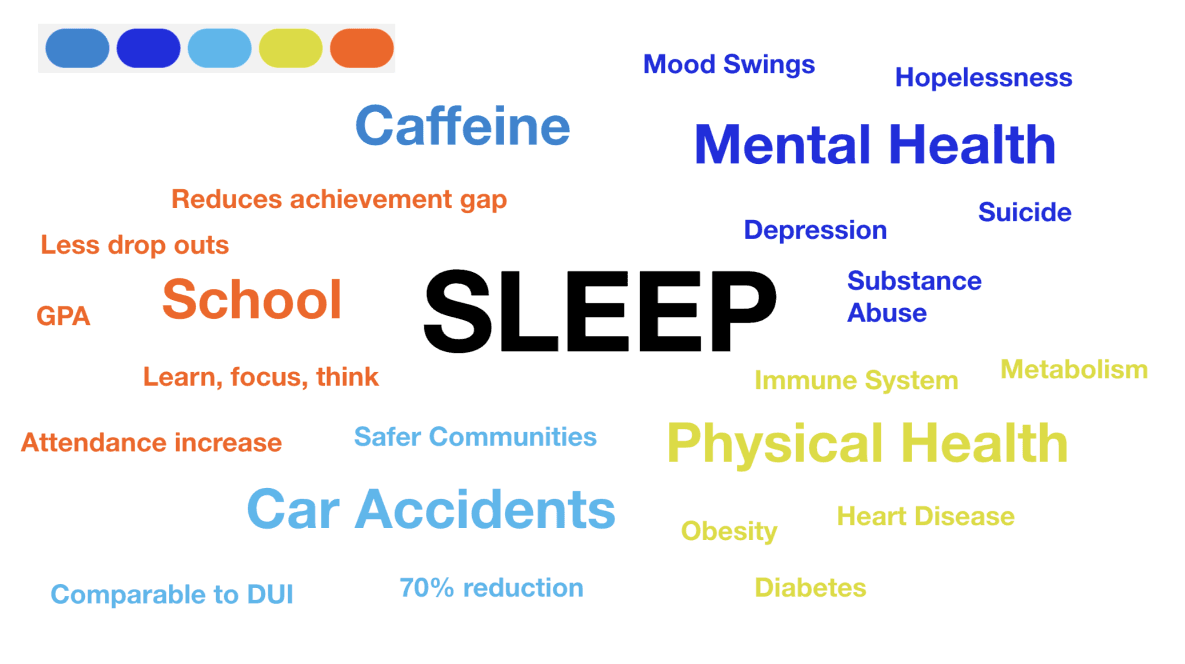
I used this to map out all of my thoughts and ideas about what directions this project could go into, and then grouped them by topic. It was nice to just dump all of my thoughts onto ‘paper’ and have them be more organized. This gave me ideas on what I could write about and how to divide up chapters.
Collecting Visual Inspiration
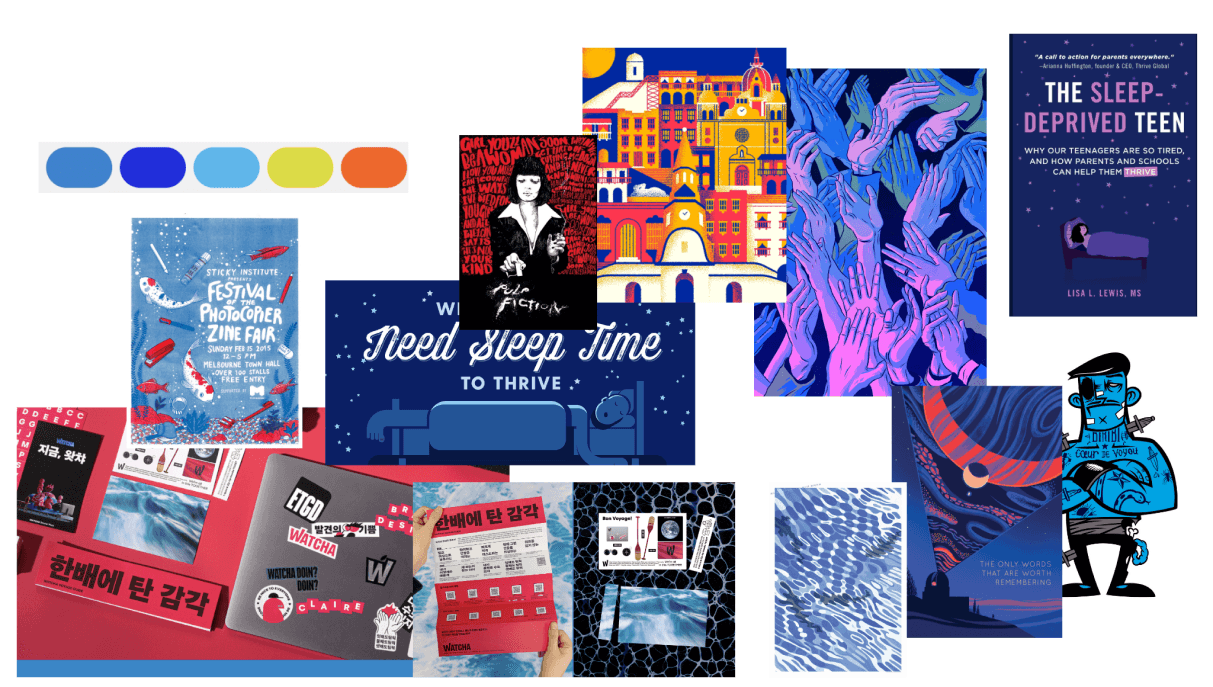
Color palettes, text, graphic styles, you name it. It was interesting to see what I wanted to do initially versus where I ended up after countless testing of design choices.
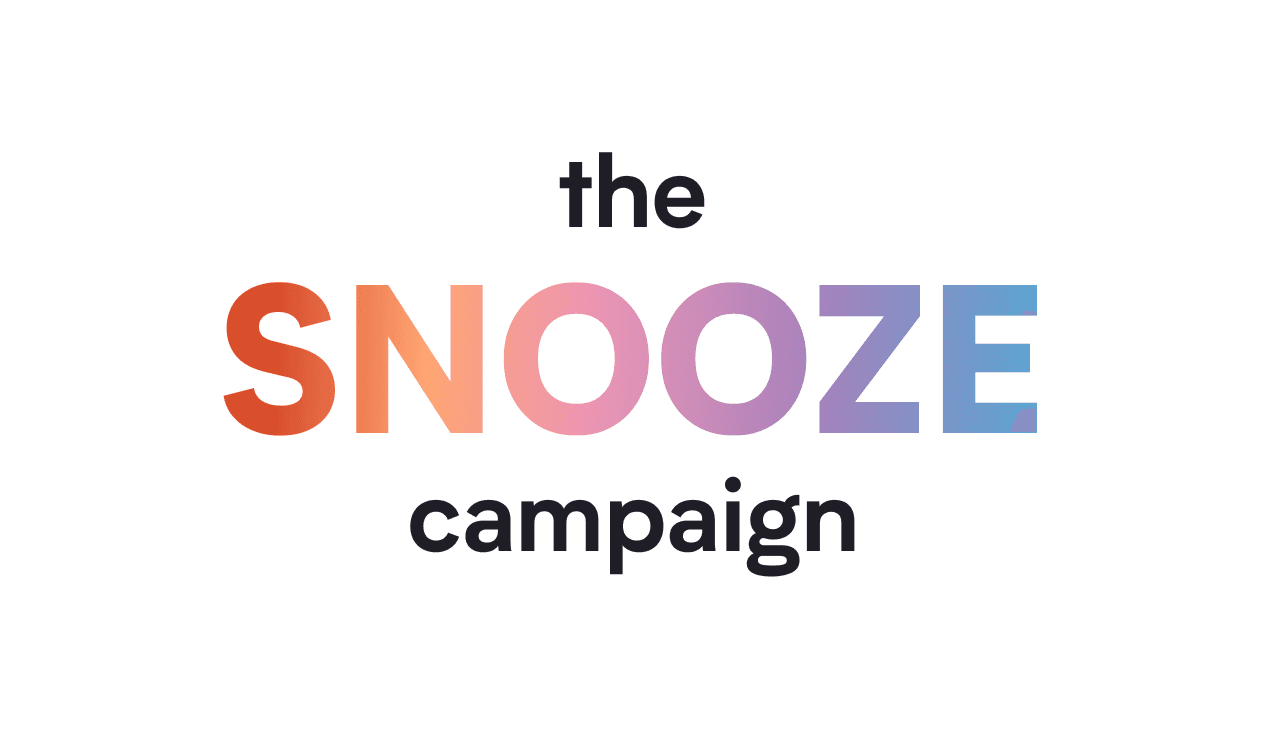
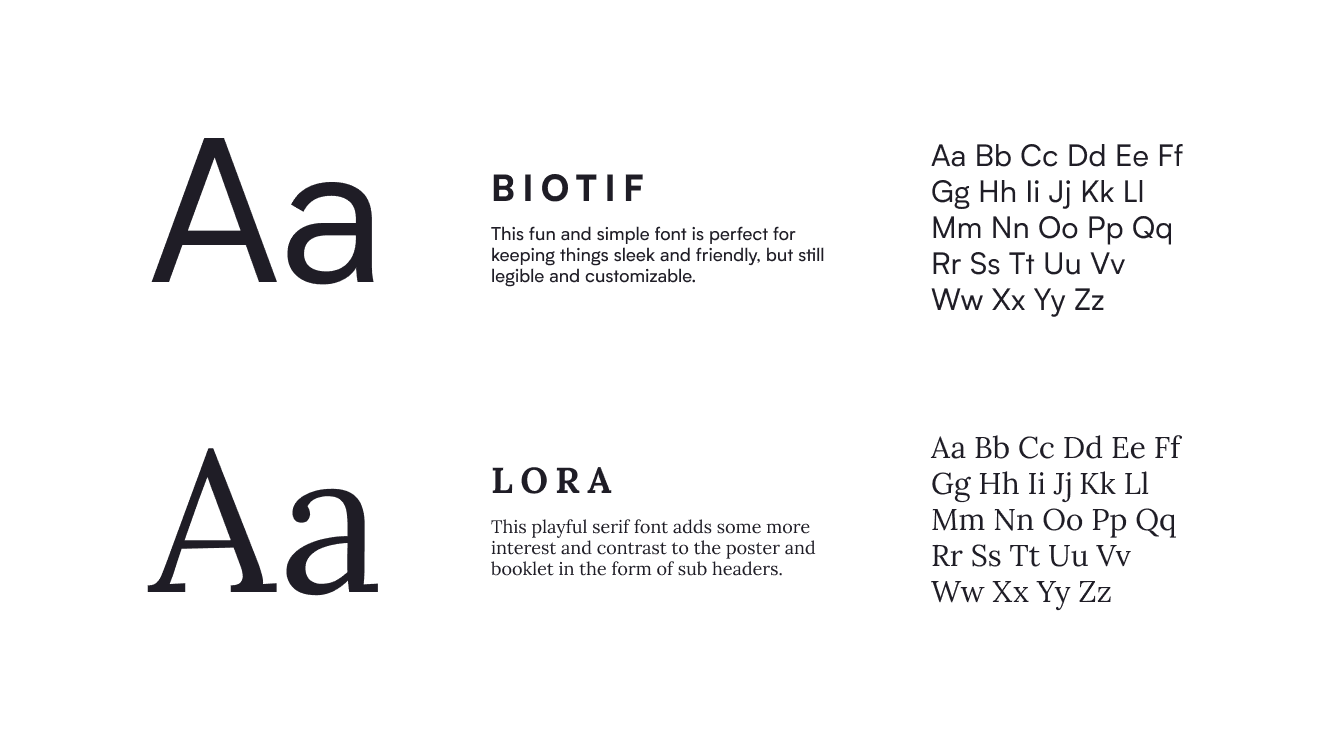
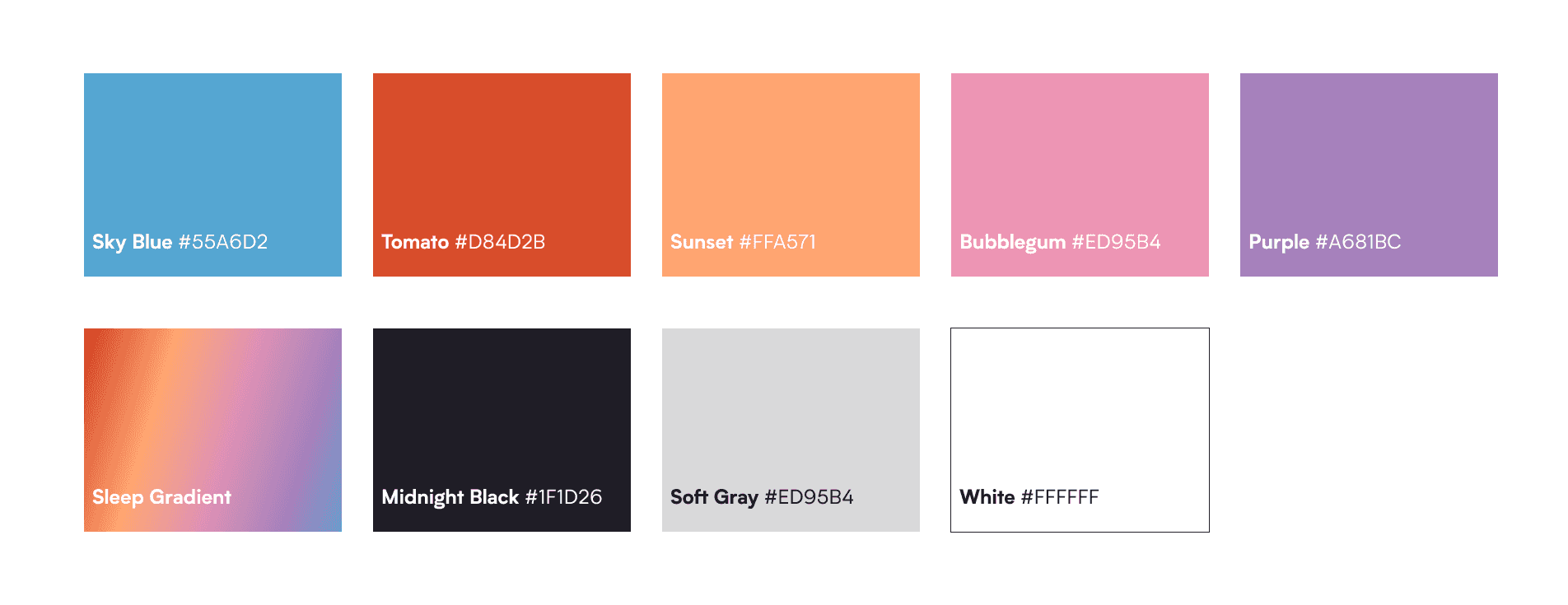
Branding: Logo, Typography, Colors
I wanted to keep this simple and legible, as that fits the purpose of the campaign and is easily searchable. I incorporated the gradient of the color palette into the logo to keep things fun and tie everything together.
I was scrolling through Spotify’s website when I saw this gorgeous font Biotif being used and knew right then that it would be perfect for this project.
This color palette adds so much life and fun to the deliverables. It’s balanced and recognizable, and creates a beautiful gradient.
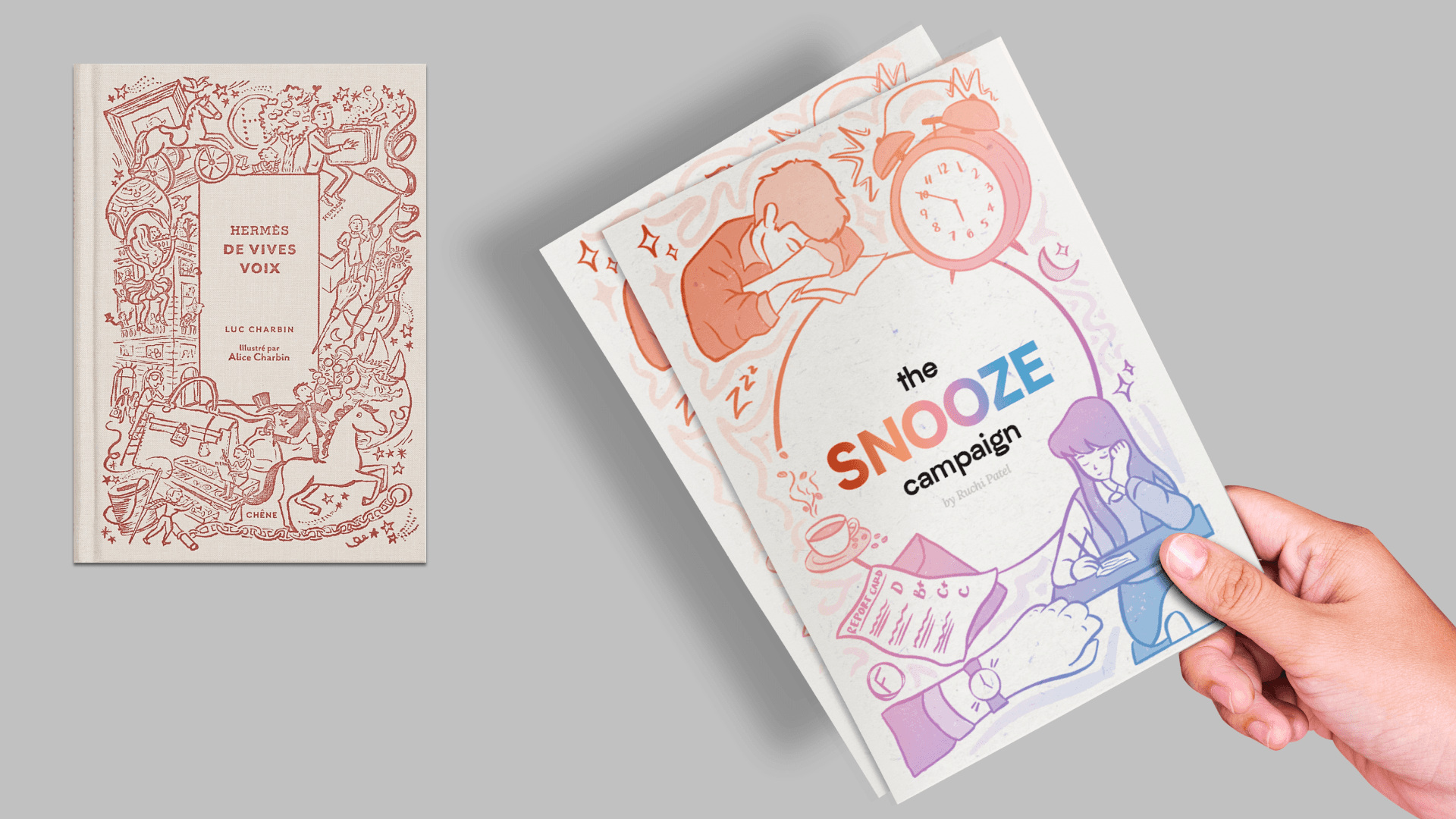
Cover Design
I was inspired by this Hermés book cover. I really liked the illustrations overlapping an empty shape, and added my own spin on it.
Chapter Intro Page
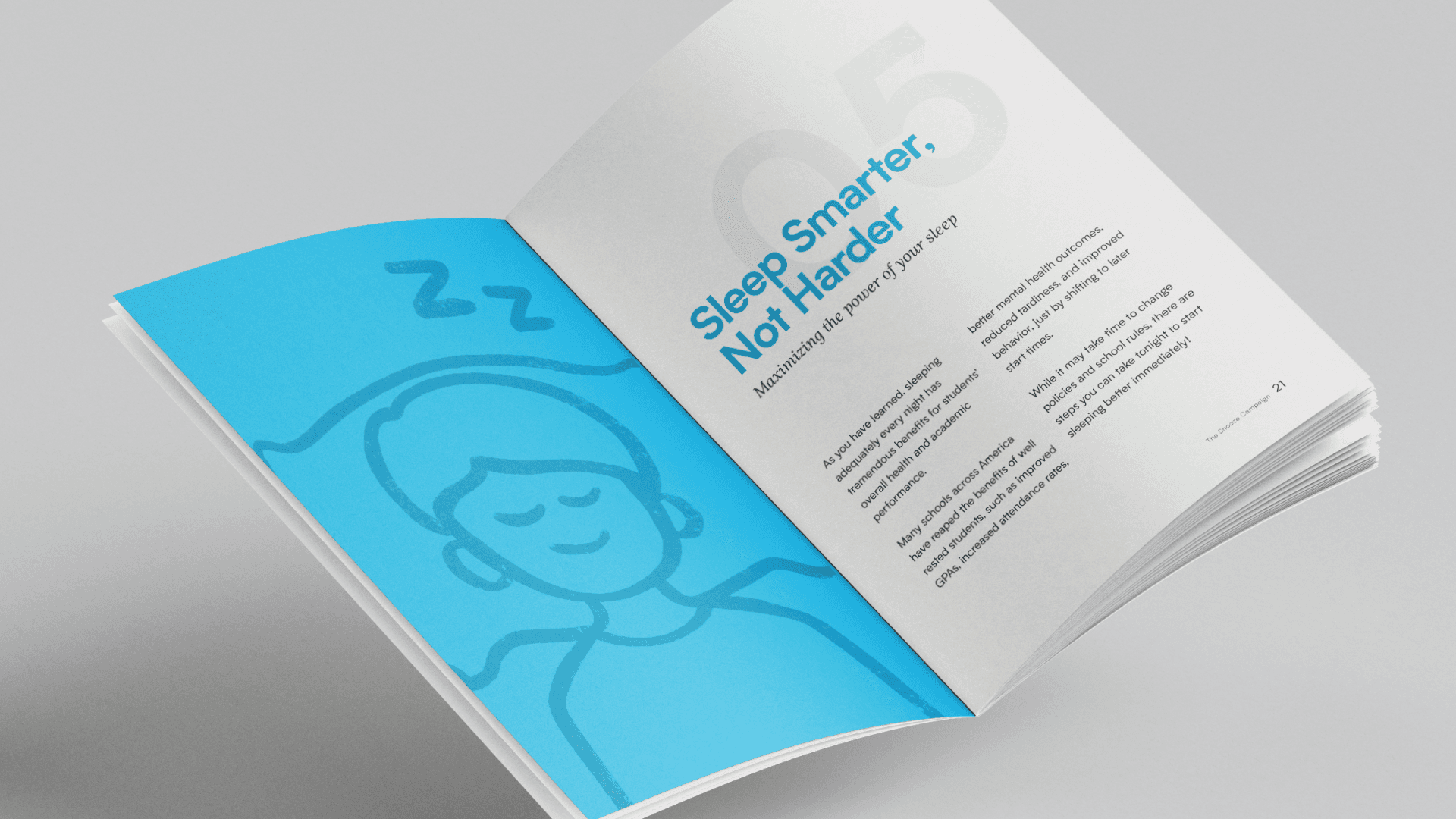
A full color page helps to visually break up the booklet and introduce a new chapter. The simple illustration style used here gives a quick overview on what the chapter will be about, without taking away attention from the text. I liked leaving half the page for just the title and chapter number, to give some white space and ease into the text.
User Testing
Title:
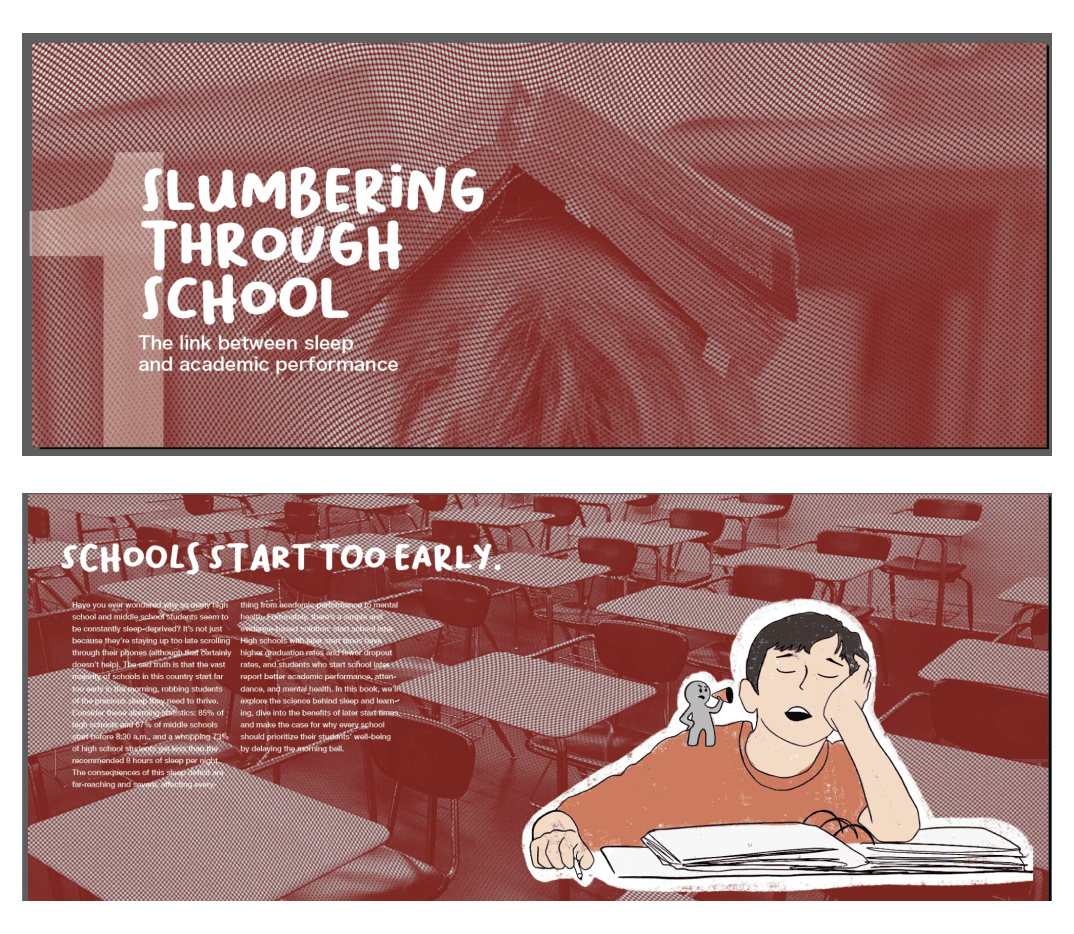
I came up with many different titles and pitched them to my professor, classmates, and friends to see what people thought. Eventually, I decided to stick with my original title of The Snooze Campaign, because it’s clear, effective, and memorable.
Book vs Pamphlet:
I originally thought I would be creating a book, but after further consideration, it made sense to create a booklet instead. This way, its more easily distributable for teachers to hand out to students, and still short enough to have all the facts that students need to read without them feeling overwhelmed or bored.
In terms of visual design, I tried many things out but ultimately settled on a gradient design with hand drawn characters that students could relate to.
I spent a lot of time deciding how many pages I would have total, where and how to start the chapters, and other design details. I was able to figure this out by constantly revising it and sharing it with the class to get everyone’s feedback and thoughts.
Poster 1: Teenager vs Rooster
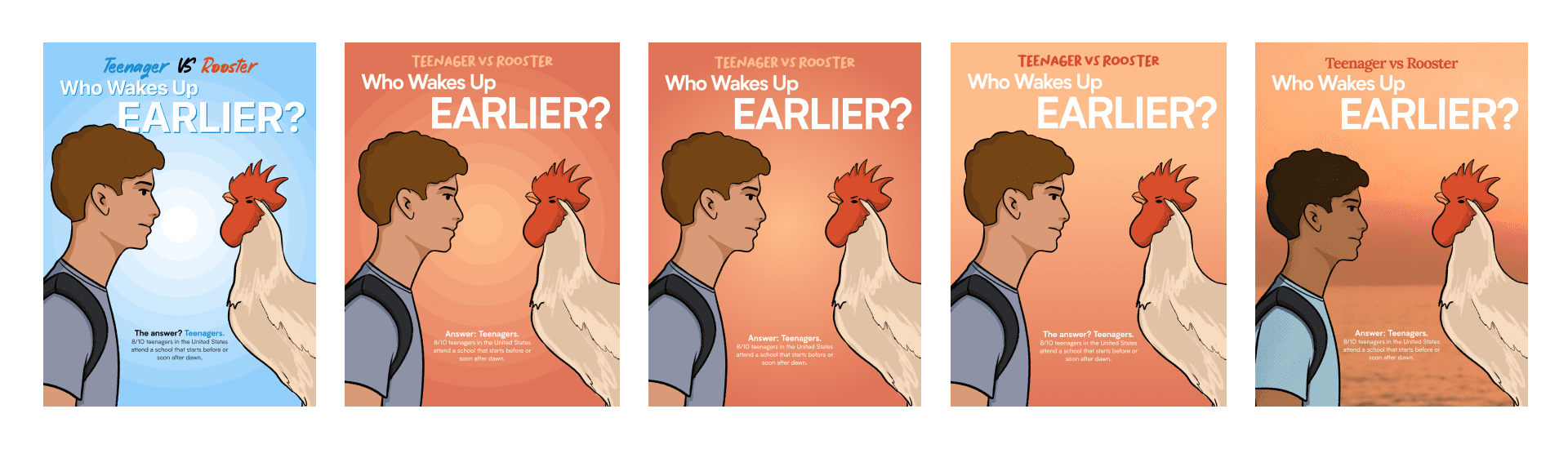
With this poster, I wanted to grab students attention with this strange imagery of a face off between a boy and a rooster. The main goal is to get across just how early students need to be waking up because of their school timings. After getting advice from my peers, I decided to stray away from the blue and instead go for a color that more intuitively represents waking up, like a sunset. I updated the subheader many times to get the look I was going for. I also had to decide between either having a stepped gradient, or a smooth one.
Poster 1: Dusk or Dawn
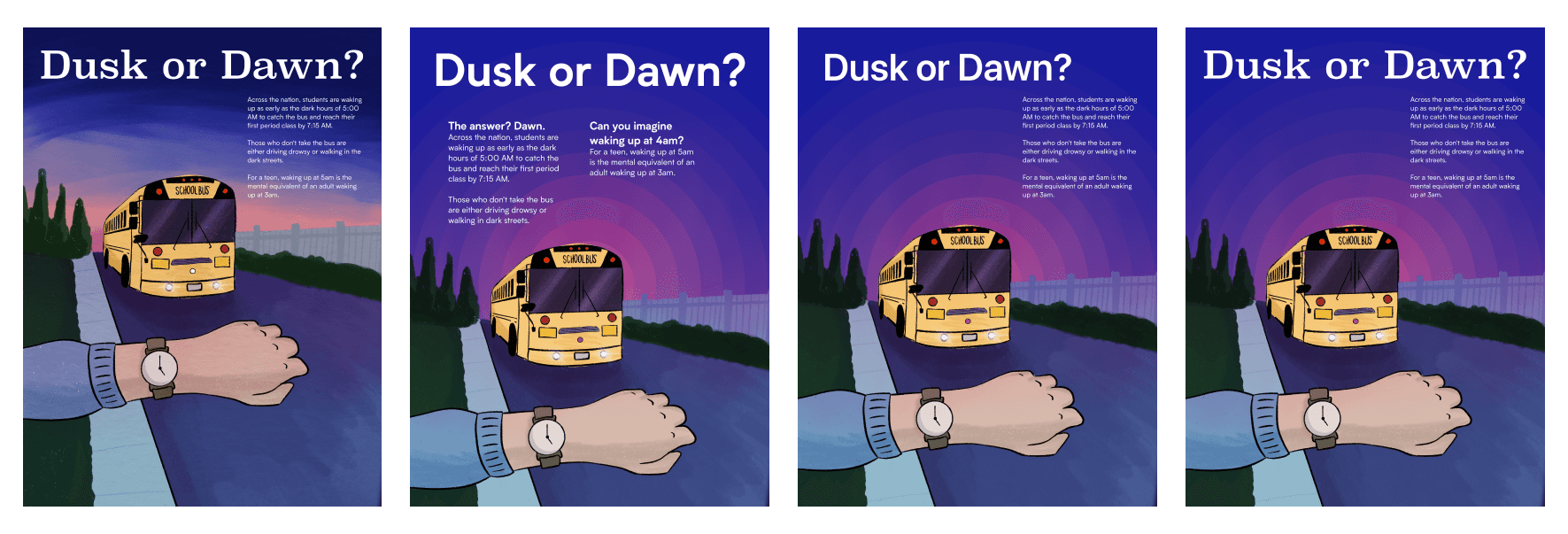
With this poster I wanted to illustrate how dark it is when students are preparing for school, and how the time equivalent for an adult is even more ridiculous. With these posters, I mostly experimented with the colors, backgrounds, layout and typography.
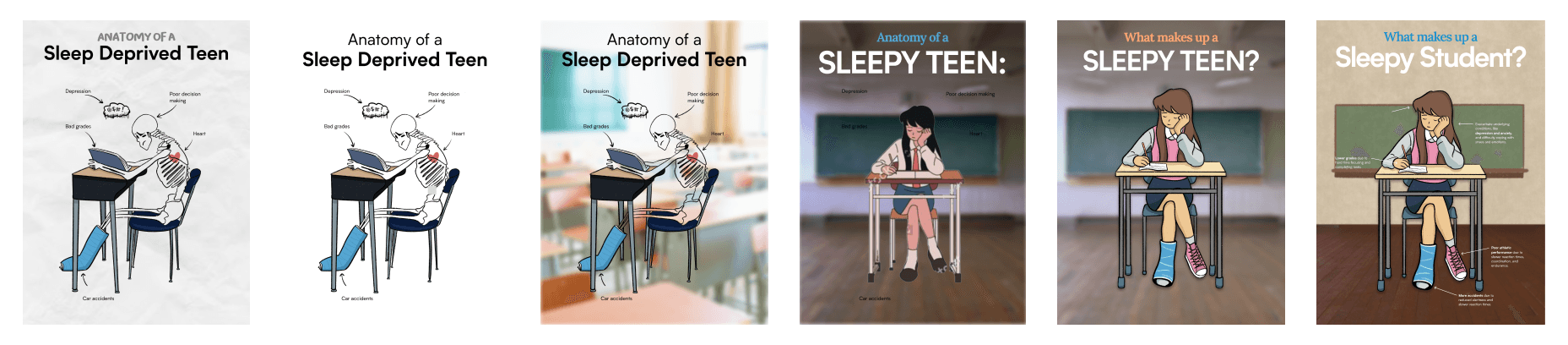
Poster 3: What Makes a Sleepy Student?
With this poster, I wanted to grab students attention with this strange imagery of a face off between a boy and a rooster. The main goal is to get across just how early students need to be waking up because of their school timings. After getting advice from my peers, I decided to stray away from the blue and instead go for a color that more intuitively represents waking up, like a sunset. I updated the subheader many times to get the look I was going for. I also had to decide between either having a stepped gradient, or a smooth one.
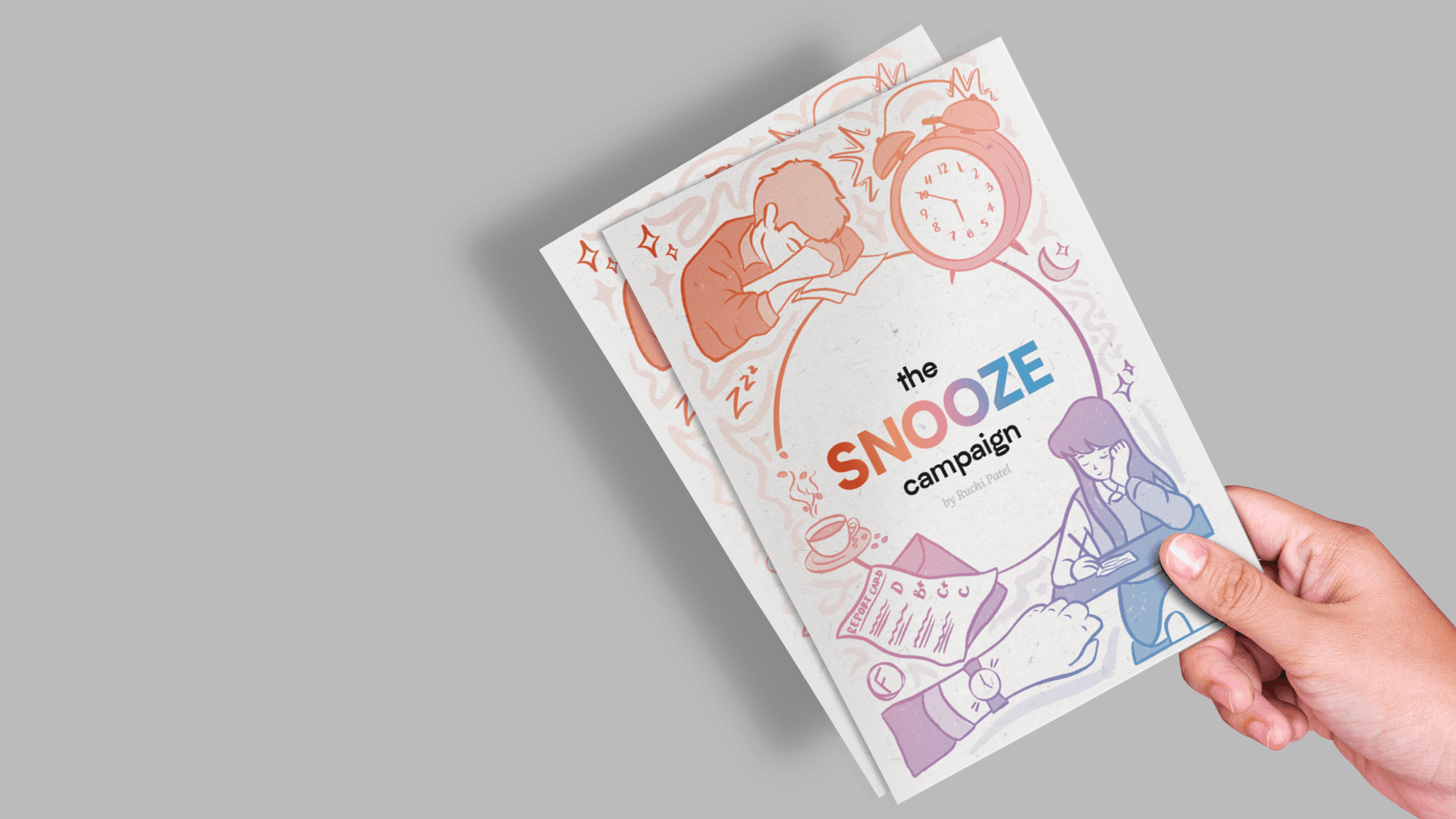
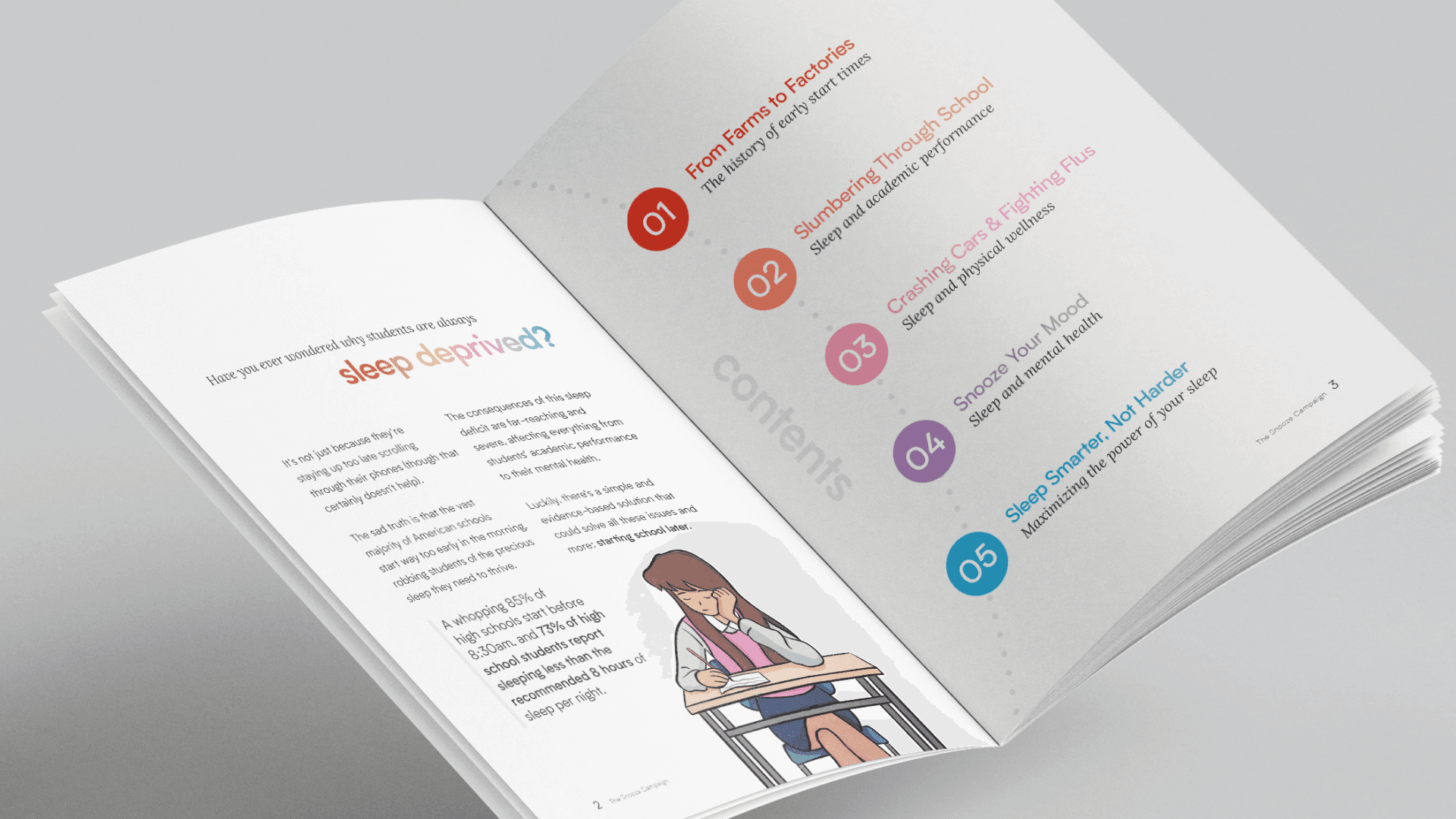
Educational Booklet
24 pages complete with a cover, introduction, table of contents, 5 chapters of text, and illustrations.
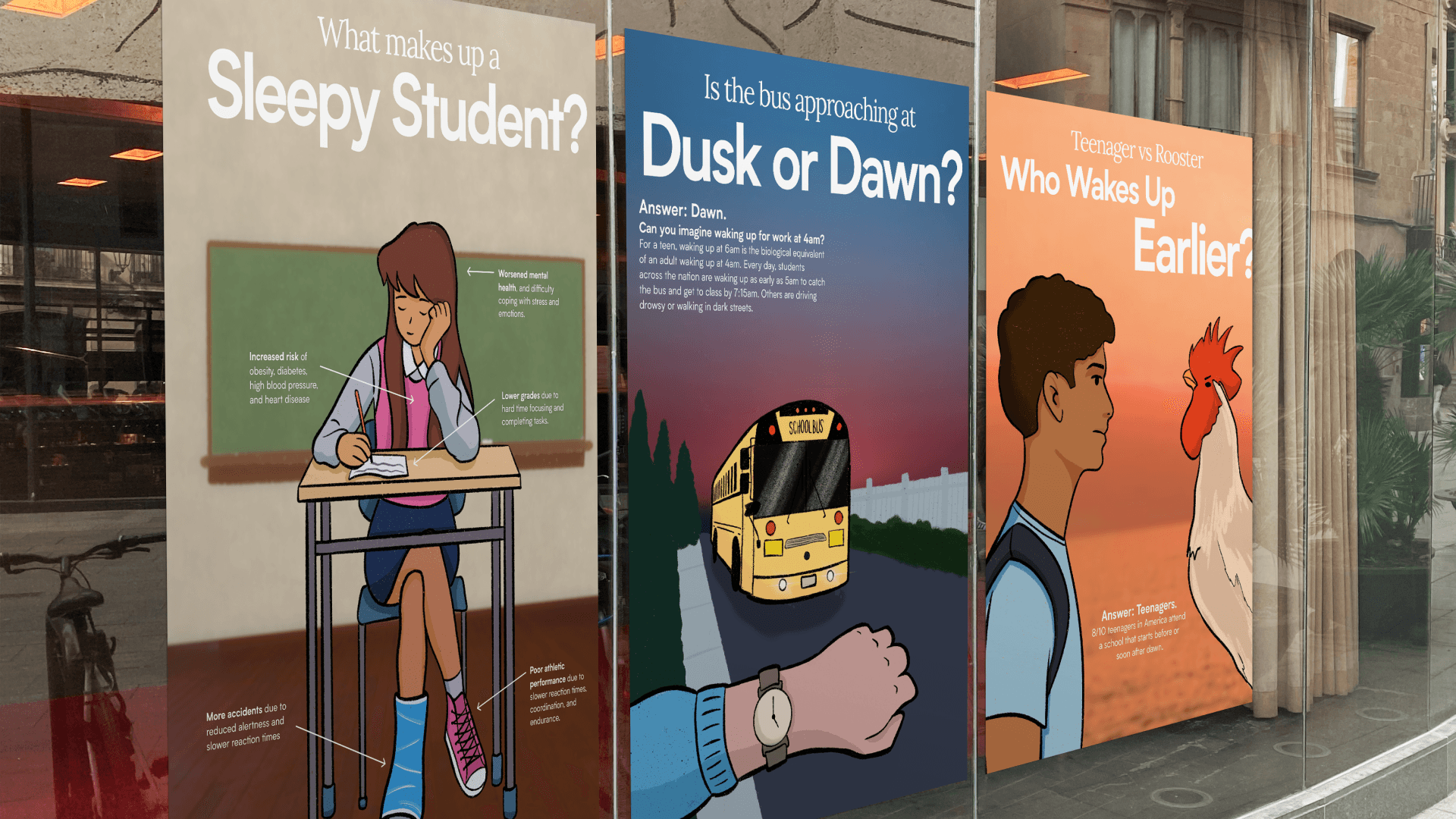
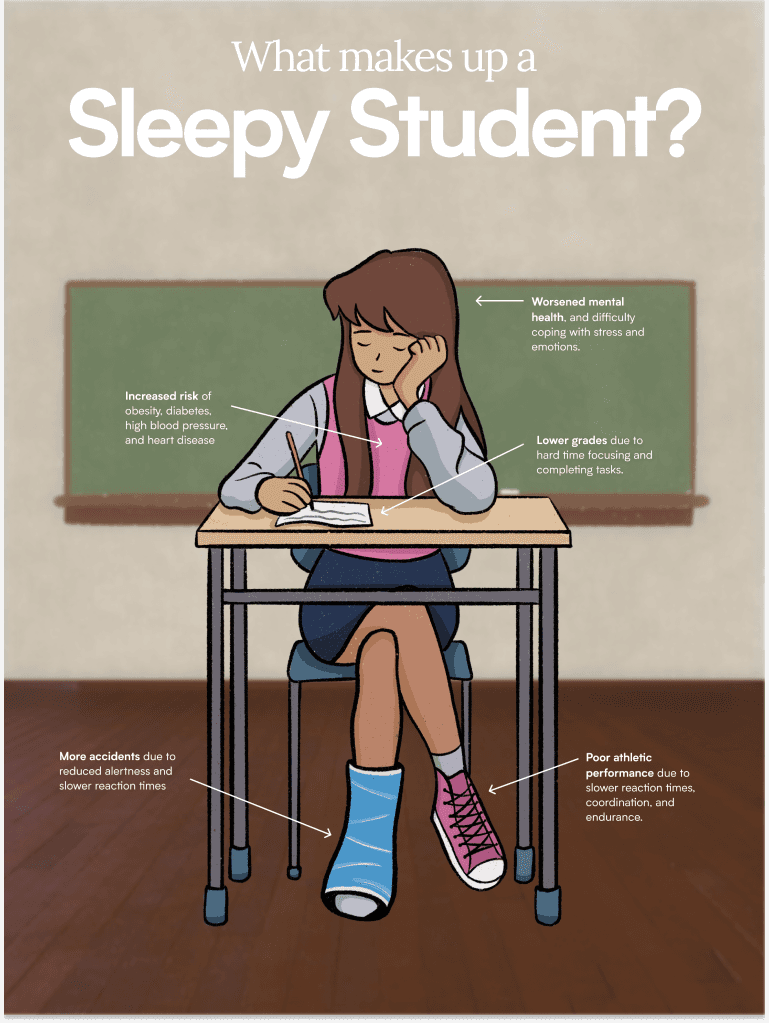
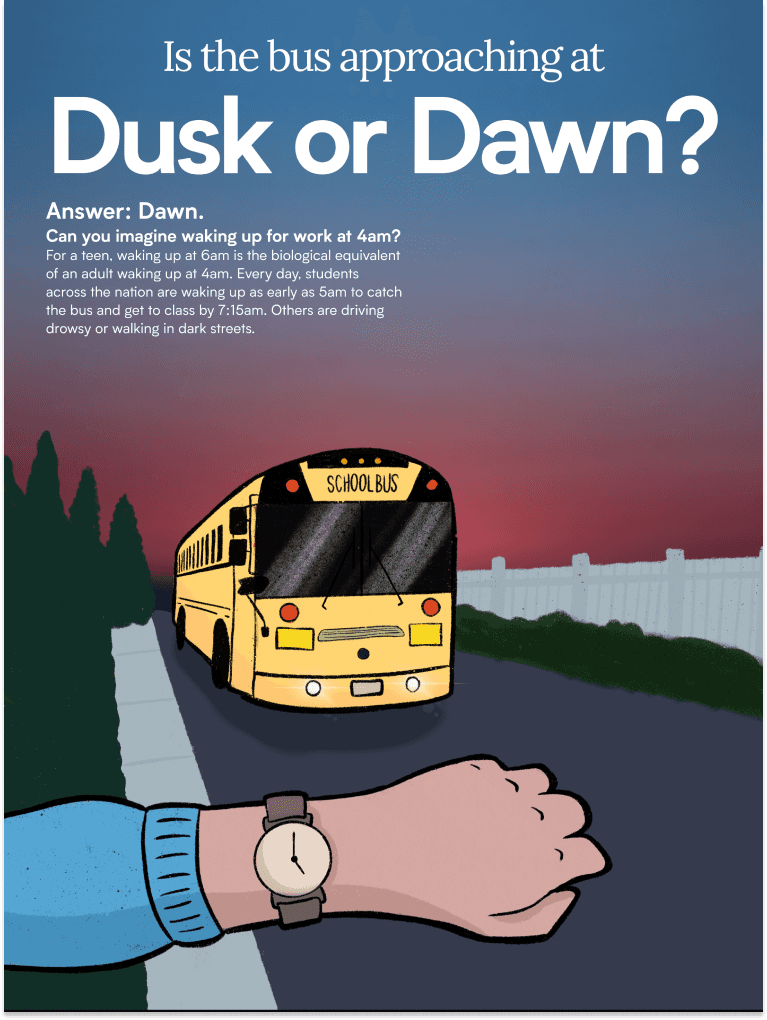
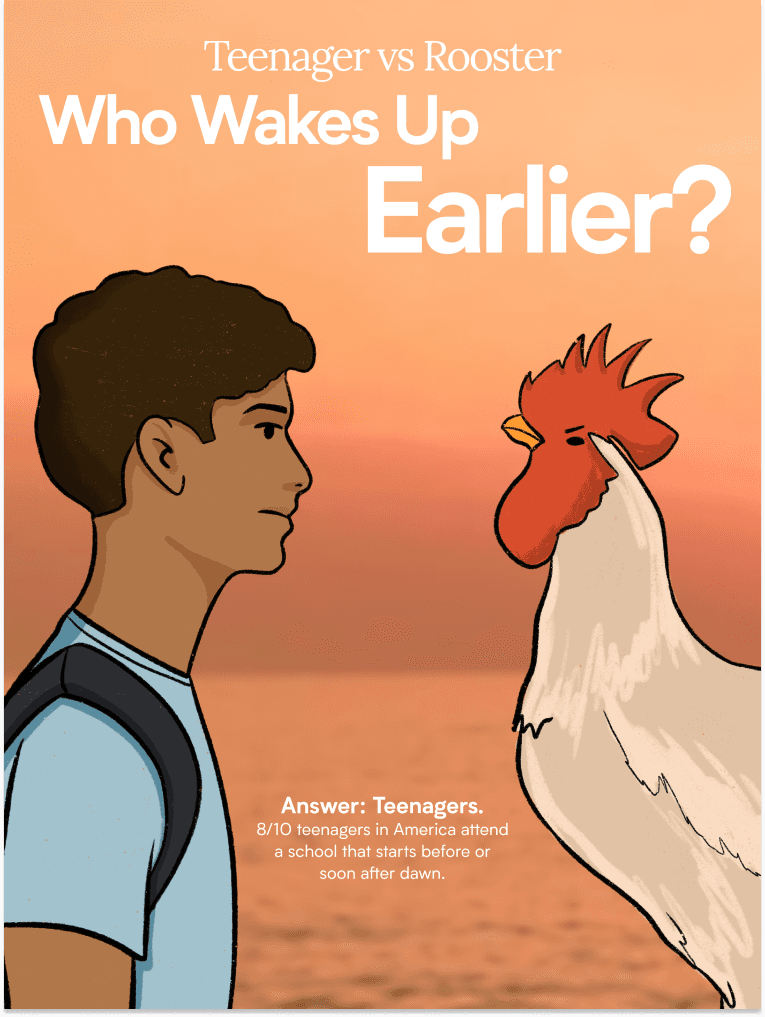
Set of 3 Posters
I designed three educational posters with the same visual styles and tone, for use in schools to remind students to prioritize their sleep.
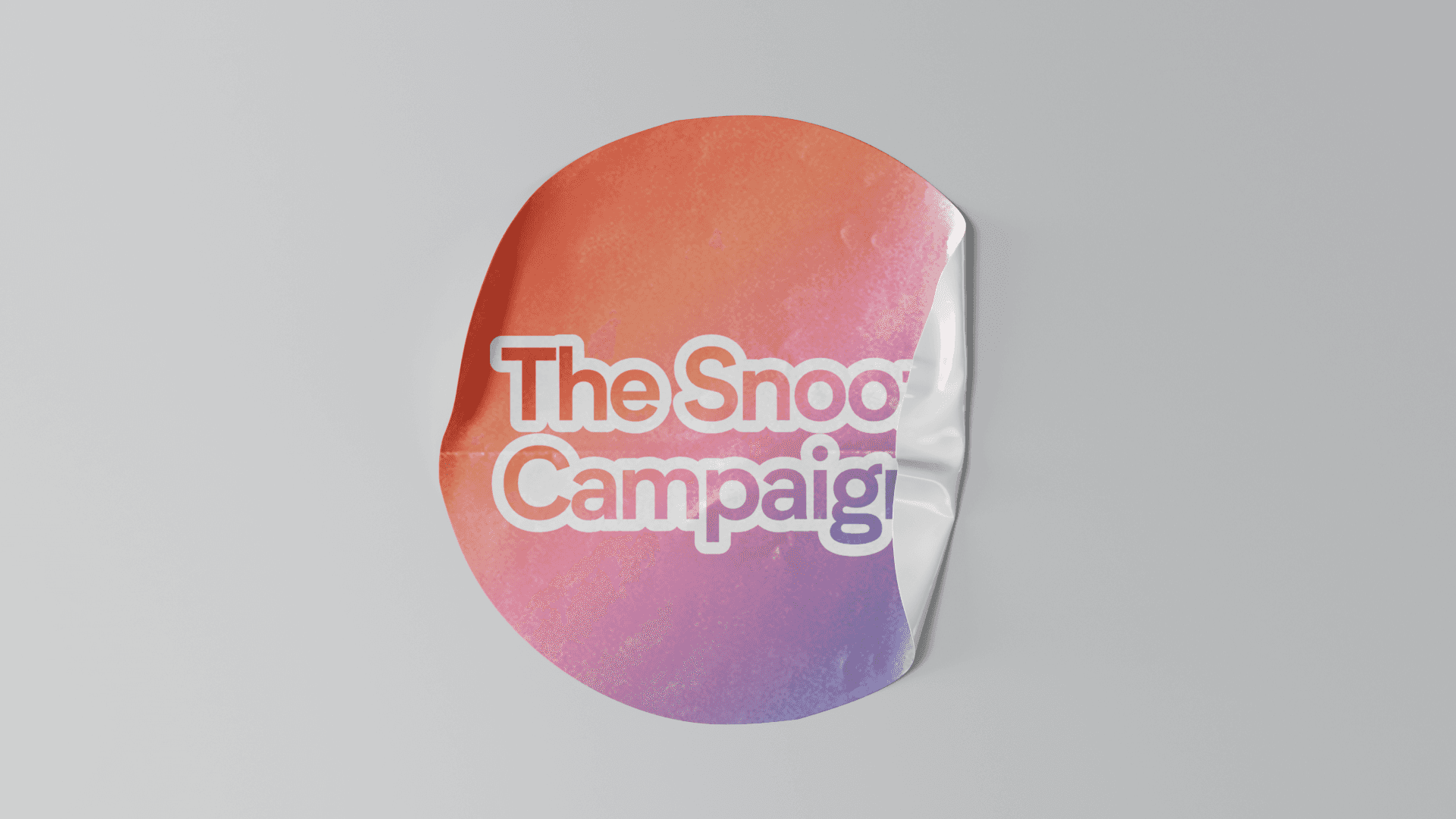

Stickers
These are some fun stickers targeted towards teens and uses their humor and aesthetics. They would be able to help spread the message of the campaign by sticking these on their lockers, water bottles, and laptops.
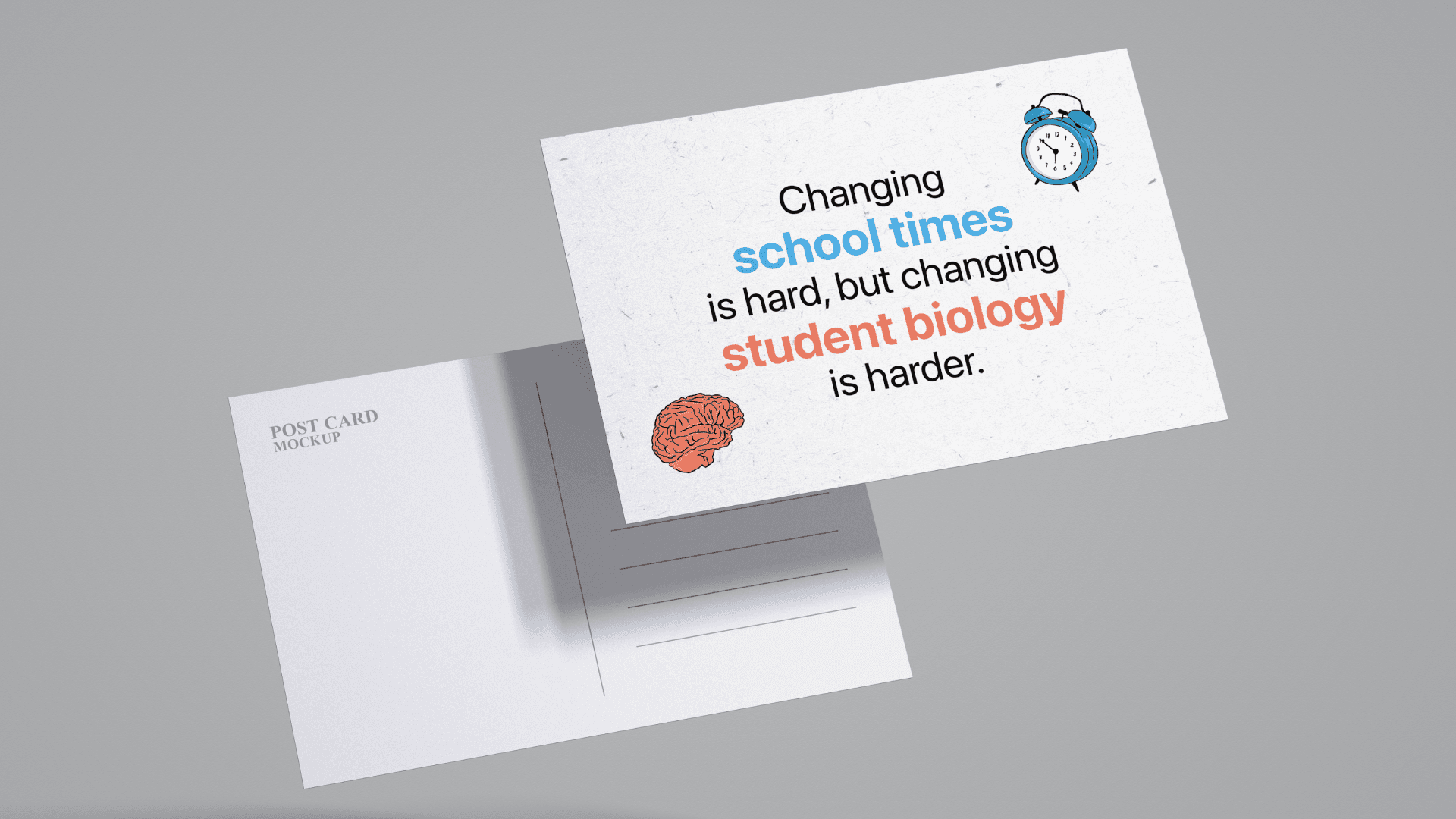
Postcard
This was originally a poster design but the scale was better suited for a postcard, so I went that route. I wanted to create a postcard design so that people could share these easily whilst sharing the message as well.
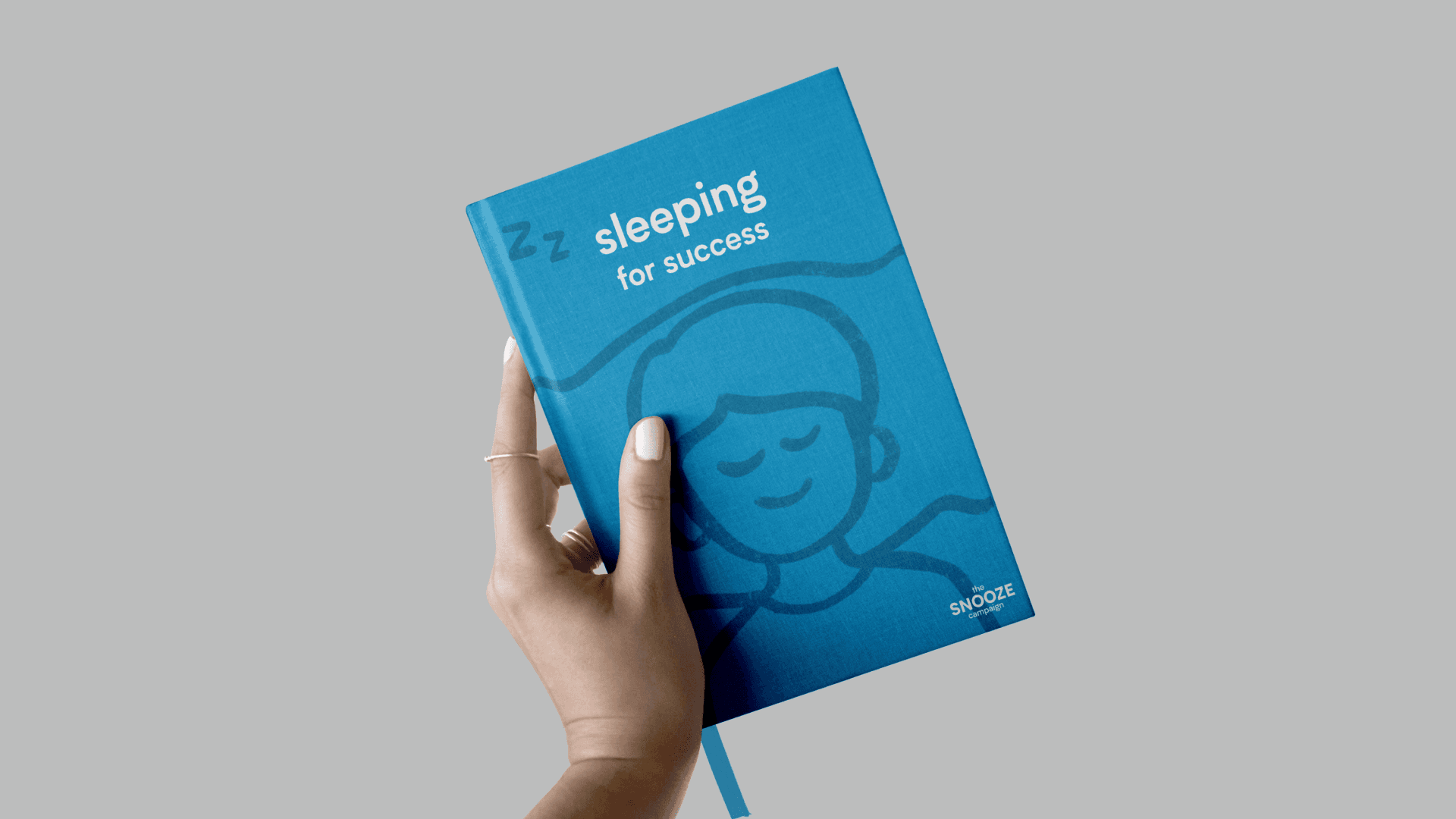
Journal
This sleep journal was designed to be a place where people could log their late night thoughts, track how much they’re sleeping, and create a healthy night time routine of avoiding screen time. I know many apps exist with a similar goal, but they encourage people to be on their phones at bed time which ultimately makes it harder to fall asleep due to the blue light emitted by electronics. This could also be part of my future work, where I could hash out what exactly what is needed in such a journal.
Reflections
Choosing the topic of sleep deprivation, especially regarding teens and school schedules, was a personal passion of mine, and I am thrilled to have been able to create accessible and engaging resources to promote good sleep hygiene.
This project was received well in our final class review, where we presented our projects to a board of designers as well as our classmates. Peers had great questions about the workflow, were interested in the research, and agreed that the cause was an important one. I earned an A in the course.
Through this project, I honed my design skills and expanded my knowledge of various design tools, including Figma, InDesign, and Procreate. In particular, I gained learned how to design for print, which was a new and exciting challenge for me. I also made it a priority to create designs with my audience in mind, learning how to adapt my work to suit different demographics and better meet their needs.
Finally, collaboration was a key factor in my success. Regularly sharing my progress and getting feedback from my peers proved to be an incredibly beneficial practice. By bringing visuals and hard copies to our critiques, I was able to get into the details of my designs and get everyone’s thoughts. I learned how to ask the right questions to the group to hear what I needed in order to push my work forward. Equally important was the ability to listen to and learn from my fellow designers. Seeing them overcome challenges in their own work inspired me and provided fresh perspectives on how to approach my own design challenges.